


Technology is advancing rapidly, taking us on rushing journey where we don’t quite know the destination. Anni Rowland-Campbell takes us through some of the important issues and theories of ‘the digital age’: where we are now and what’s to come. She argues that, if humanity is to be preserved, the philanthropic sector must place itself firmly at the forefront of determining where we’re headed.
Save KIDS Hackney Playground: The £100k Appeal
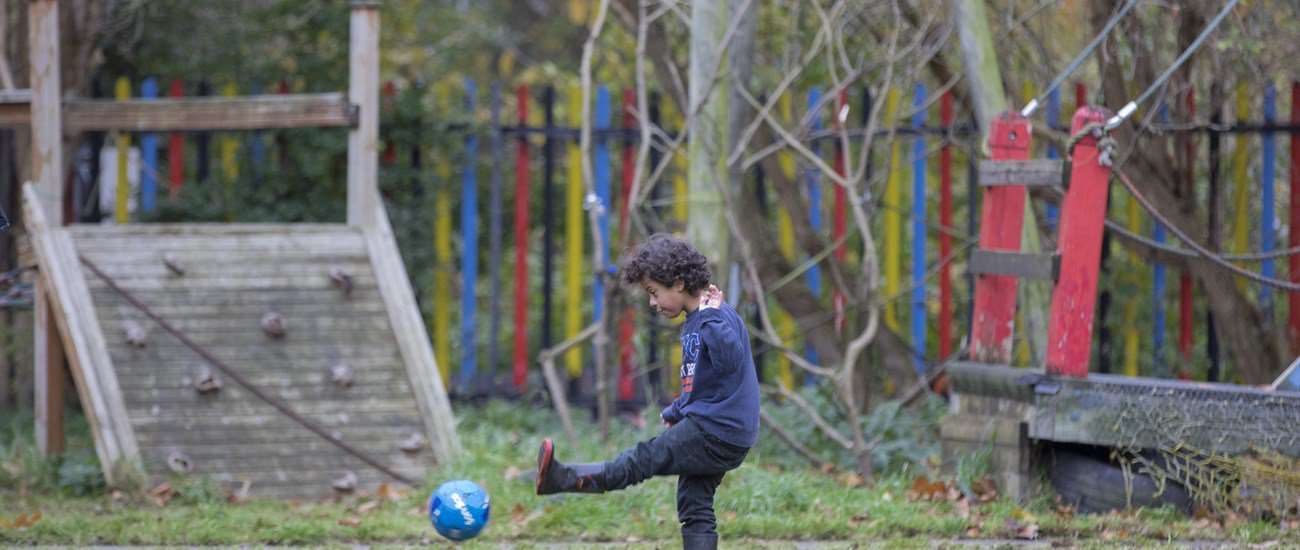
KIDS Hackney Playground is the only specialist playground for disabled children and currently supports over 100 families in the local area. We are at risk of closure and need your donations to keep our playground open.
Why you should give
KIDS Hackney Playground opened in 2002 and has been a vital service for over 800 disabled children, young people and their families in that time. The playground is a space where disabled children and young people are given confidence and independence to enjoy leisure and recreational activities with the encouragement and support of professionally trained, caring play workers.
92% of parents feel their children miss out on play and leisure activities due their disability and struggle to find appropriate activities for them. 1 in 5 children in Hackney has a disability making KIDS Hackney Playground a lifeline for the local families we support.
The playground is also integral in improving the well-being of the whole family as it allows parents to take a break from their demanding caring role to spend quality time with each other, their other children or completing everyday tasks, knowing that they can trust KIDS to look after their child in totally safe environment.
What the money goes to
Whilst we receive funding from the Local Authority, some corporate and trust donations, these simply don’t cover costs and so we are launching an appeal to save KIDS Hackney Playground and raise the £100,000 needed to keep our playground open
How can you support
To make a donation to the Save Hackney Playground campaign, watch videos on the WeGiveIt homepage
£10 pays for one hour’s support from a play worker
£20 contributes towards equipment that regularly needs replacing
£50 pays for one after school intensive session with a play worker 1:1
Other ways to donate
Text: To donate £10 text HACK17 £10 to 70070
Call: 020 73593635 (option 4)
Post your donation to: KIDS fundraising, 7-9 Elliott’s Place, London, N1 8HX
To find out more about other ways to support the campaign email: fundraising@kids.org.uk or call
020 73593635 (option 4).
Thank you for your donation.
Follow Kids on Twitter and Facebook
Support Kids on WeGiveIt
Fareshare and Tesco – Reducing Food Waste
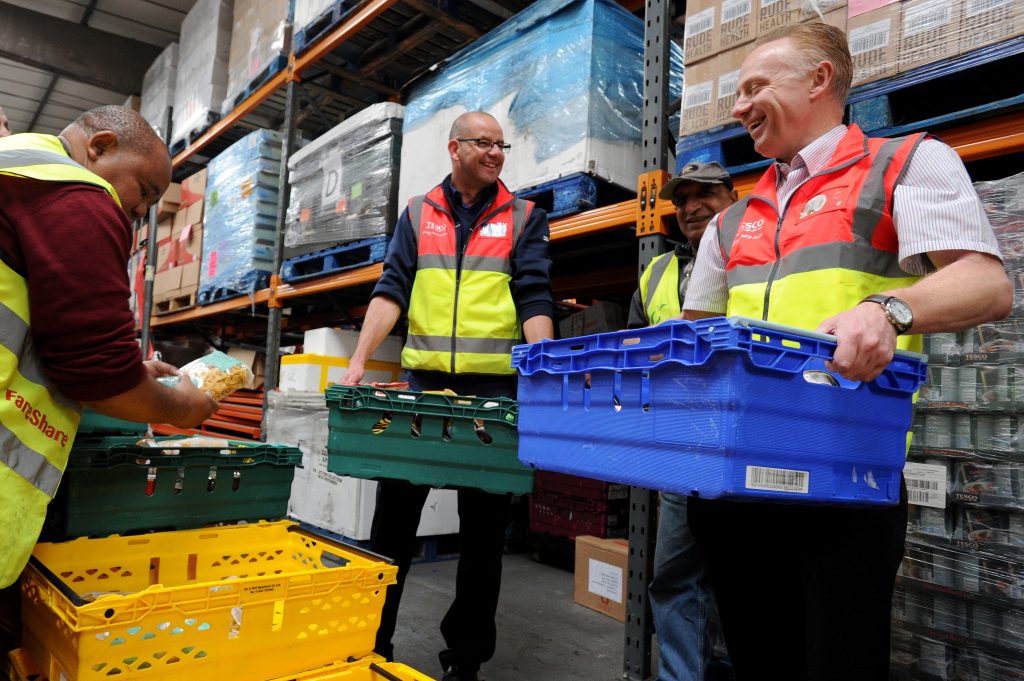
In 2012, as part of a commitment to reduce food waste and recognize the opportunity to help alleviate poverty in the UK, Tesco strengthened its partnership with WeGiveit partner; FareShare by ensuring surplus food within its supply chain is used to feed people.The partnership with FareShare is perfectly aligned with Tesco’s CSR objectives to both reduce food waste and support local communities, as the surplus food Tesco provides is redistributed by FareShare to thousands of charities and community groups across the country.
Supply Chain Solution
Tesco’s surplus food redistribution initially started with an opportunity in their online grocery business. In stores fulfilling online orders only, food cannot be reduced to clear, potentially leading to a surplus. This surplus is identified daily and split between a staff shop and FareShare. A successful trial saw Tesco.com vans from all six online grocery stores in and around the M25 delivering food out to FareShare’s Deptford and Brighton-based Regional Centres daily.Following the success of the online grocery roll-out, Tesco moved on to identify the ability to divert surplus food from within their Fresh Supply Chain to FareShare. Tesco recognised the importance of identifying Fresh surplus food as early as possible to ensure the longest life for redistribution. FareShare now receives surplus food from all eleven Tesco Fresh Distribution Centres, including fresh fruit and vegetables, meat, dairy and chilled ready-meals.After maximising this opportunity, Tesco turned their attention to their ambient surplus. From the autumn of 2015, Tesco Grocery distribution centres began delivering the surplus to FareShare regional centres. This food includes dry ambient goods like rice and pasta, tins and jars and other store cupboard essentials.Additionally, as and when it occurs, FareShare also receives range reset stock and discontinued lines, making the best use of products which no longer have any commercial value but are still perfectly fit for human consumption.
Supplier Network
To help increase the volume of food reaching the FareShare network even further, Tesco have introduced FareShare to their supplier base as the recommended solution for creating social value from their surplus stock. This has in turn, led to new food manufacturers and producers partnering with FareShare to redistribute their surplus products, providing even more meals to people in need.
Store-Level Solution
To combat food waste appearing at store level, Tesco partnered with FareShare and Irish social enterprise FoodCloud to roll out brand new scheme called FareShare FoodCloud.Combining innovative technology with on the ground support, FareShare FoodCloud is a simple and safe solution for redistributing store-level surplus food to people who need it. Once charities have registered for the scheme and been matched with a participating store, they are notified about unsold food by text message and can then collect the food free of charge.After a successful pilot in London in June 2015, FareShare FoodCloud is being rolled-out to all UK Tesco stores, with the target for the scheme to be live in all Tesco stores by the end of 2017. Charities and community projects can register their interest here.
Tesco Customers
Since 2012, Tesco has hosted the Neighbourhood Food Collection twice a year in partnership with FareShare and the Trussell Trust. Working together, volunteers and Tesco staff encourage customers to donate food at collection points in Tesco stores across the country in what is now the biggest food collection in the UK. The Neighbourhood Food Collection allows FareShare access to long-life cupboard essentials that complement the predominantly fresh food that we get from Tesco and other food partners.Following the success of the Neighbourhood Food Collection, Tesco have installed Permanent Collection Points (PCPs) for FareShare at over 140 stores across the country. Tesco shoppers can now donate food during their shop to help feed people in need 365 days a year.
Results
Since our partnership began and taking into account all of their distribution channels, Tesco and their customers have provided enough food to make 16.4 million meals for vulnerable people across the country. Our work with Tesco demonstrates how the retailer has taken a pragmatic and pro-active approach to maximising the surplus food distribution across all parts of their operation, creating a huge social benefit to communities across the UK.
Josh Hardie, Corporate Responsibility Director at Tesco explains:“Food poverty is a significant problem in the UK and we want to help make a difference. We have built on our relationship with FareShare ensuring that all our fresh and ambient food surplus from distribution centres and online grocery stores goes to feeding people in need. This food will provide millions of meals a year for people in the UK.” Lindsay Boswell, Chief Executive of FareShare says:“Tesco has demonstrated real leadership in tackling food waste. Over and above the large volumes of surplus food they provide us, Tesco should be applauded for how they have embedded FareShare into all aspects their business – from distribution centres to stores and fresh food to ambient. Tesco’s level of commitment to using their surplus food for social good, has helped provide millions of meals for vulnerable people across the UK.”
Follow Fareshare on Facebook and Twitter
You can donate to Fareshare for free on WeGiveIt. Head to the homepage and watch free videos.
Fareshare – Baste A Tesco Turkey And Feed People In Need
8th November 2017
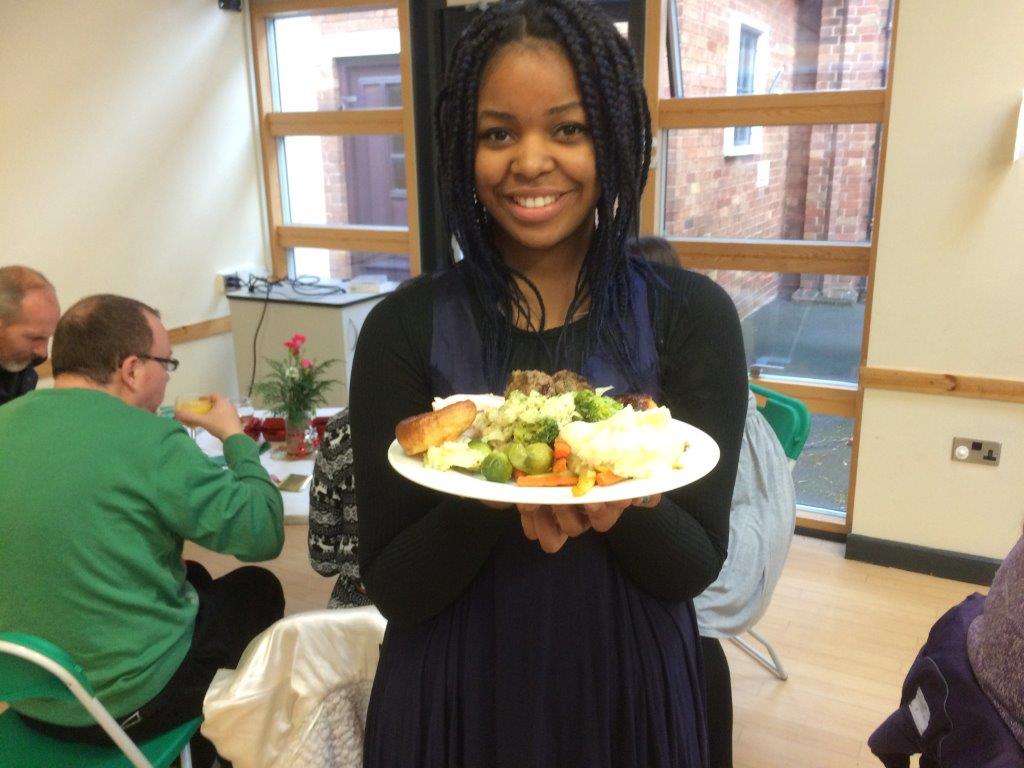
With Fareshare and a generous £1 donation from the sale of a range of fresh Christmas turkeys from Tesco means 1.4 million meals to people in food poverty this year.
However many people you’re having round the table for Christmas lunch, if you’ve bought your turkey from Tesco, you’ll be helping to feed more than one million people in need, with the help of Fareshare.
A generous £1 donation from the sale of a range of fresh Christmas turkeys from Tesco will be shared equally between FareShare and the Trussell Trust, which means FareShare will be able to provide an additional 1.4 million meals to people in food poverty this year. The campaign started on 6 November and will run across all stores and online right up until 25 December 2017.
“This generous initiative from Tesco is perfect timing – it means we can help 6,700 charities across the country to continue providing food and life-changing services to those in need this Christmas.”
Alessandra Bellini, Tesco Chief Customer Officer, said: “This year, our campaign will celebrate the many ways we come together at Christmas, and how food sits at the heart of it all. We want our customers to know that however they choose to do Christmas, and no matter what they need, we can help.”
Original article published 8th November at Fareshare.org.uk
Follow Fareshare on Facebook and Twitter
You can donate to Fareshare for free on WeGiveIt. Head to the homepage and watch free videos.
You will read about charities’ projects on WeGiveIt Blog
Navigating around the psychological barrier to mediation
It was good to see The Times running a piece last week by the Tutu Foundation UK’s head of mediation and training, Paul Randolph, outlining the case for compulsory mediation within the civil justice system.
He discussed the recent interim report on ADR by the Working Group of the Civil Justice Council. The 98-page document, published last month, has been described in the Law Society Gazette as bringing compulsory mediation a step closer towards the civil justice system, whilst stopping short of making ADR a pre-condition to issuing proceedings.

It acknowledges what mediators like Paul Randolph have known to be true for many years – that despite decades of efforts by the courts, judges, mediators and government, there remains the fundamental problem of the failure, so far, to make ADR familiar to the public or considered culturally normal.
On the face of it, this is baffling. Why in cases of conflict do people ignore the option of mediation in favour of outrageously expensive and often distressing litigation?
As Randolph points out the court process is utterly alien to most people. It is uneasily formal, with rows of lawyers seated in front of an elevated judge, mostly in 17th-century wigs and gowns, whilst the litigants themselves are relegated to the back benches. Worse still, the court language is complex and often difficult to understand for those without legal training. Randolph’s theory is that human beings are psychologically pre-programmed to win. They don’t like a compromise. They want to fight and emerge victoriously. He cites an article he published in the New Law Journal in April 2010 in which he pointed out that the human psyche is not naturally inclined to settle scores (however minor) through reasoned discussion.
“We have an innate aggression, which, when we are in dispute, transforms itself from a mere instinct to “survive” into an acute need to crush the opposition. We no longer act rationally or think commercially; instead, we are driven by an emotional craving to triumph.”
Now he says the time has come for stark choices. He argues “To continue the same measures of encouragement as have been tried, and failed, over the past 25 years, and expect a different outcome, is surely insane? How many more times will we hear stories of parties squandering obscene sums of money on legal fees, and losing vast amounts of precious time and energy blighting their daily lives in litigating seemingly petty squabbles? How often must we hear Judges declare in exasperation: “this case should have been mediated” – before we say ‘enough is enough’?
“Let us abandon the description ‘compulsory mediation’ and substitute in its place the term ‘automatic referral’. Compulsion is a toxic concept. Nobody, least of all lawyers, appreciates being told what to do – and least of all by Government. We may also need to revisit the word ‘mediation’ which has acquired an unfortunate connotation of ‘splitting the difference down the middle’ – in other words: compromising. This is unattractive to most litigants.
The Interim Report provides a great opportunity for a constructive transformation of the Dispute Resolution landscape. The Government would do well to grasp the nettle and take the bull by the horns (or any other suitable metaphor) to effect this beneficial and necessary change. The CJC Working Group got it exactly right when they noted (at paragraph 9.18(a)) a potential advantage of pre?action compulsion:
“It has to be worthwhile to impose a simple, universal requirement on the parties to do something which will be of benefit in all but a small minority of cases.”
This is completely in keeping with the Tutu Foundation UK ethos and the theme will be continued next April when – building on the success of its first two annual ‘Desmond Tutu Peace Summits,’ – Regent’s University London, in partnership with the Tutu Foundation UK, will bring together a host of experts who have endured some of the most extreme conflicts of the modern era.
It will be staged under the title ‘Mediating the impossible’ at the university on Friday 20th April 2018. Details of keynote speakers and more information will follow soon.
Paul Randolph, who is also lecturer in psychology at Regent’s and author of The Psychology of Conflict points out that “Whether the subject is Brexit, Trump, terrorism, military clashes, global politics, sexual abuse, policing, #FakeNews, workplace disputes or cyberbullying, one thing has become starkly clear – our world is becoming an increasingly divided place. Self-esteem and how we view ourselves is one of the strongest motivating factors in generating fear and conflict,” he explains.
“There are always two sides who believe that their perception is the only truth and that their opponents are idiots or maniacs.
“When we talk about our feelings being ‘hurt,’ we acknowledge that any form of criticism or rejection can affect our self-esteem and may be felt as physical pain. This is why we find it so difficult to admit fault or say ‘sorry.’
“Mediation is becoming increasingly recognised as an important tool for resolving conflicts in peace negotiations across politics, divorce, employment, the commercial sector and even war.”
About the Tutu Foundation
The Tutu Foundation UK was set up particularly with the purpose to help young people involved in gang violence. The foundation works with regional police forces, significant national institutions such as the NHS, in Northern Ireland helping to support the on-going peace process as well as local community and youth groups around the country. We are working with them to increase respect and an appreciation of each other’s individual humanity and so empower them as individuals and groups to achieve more, to overcome disadvantage and increase equality, efficacy and efficiency.
Walkabout Foundation #MYCHARITY and Trikes for Africa

Siblings Luis and Carolina Gonzalez-Bunster explain how Walkabout Foundation was established in August 2009 after a visit to their local YMCA in Connecticut led them to discover that Luis could not enter the building because it lacked a ramp and elevator.
Luis suffered a spinal cord injury in a car accident when he was 18 years old, which left him paralyzed from the chest down. Together, the siblings took action in their community and started the Walkabout Foundation to promote awareness of paralysis and disabilities. Luis and Carolina launched the foundation with an 870 kilometre walk along the Camino de Santiago de Compostela, and Luis became the first person in the history of Spain to cross the entire country using only the strength of his two arms.

Fast forward to 2017 and Walkabout Foundation has distributed over 10,000 wheelchairs in 21 countries, supported 7 rehabilitation projects in Kenya and India, and donated over $1 million to groundbreaking research.
Last year, they held the biggest ever London Walkabout, distributed a record-breaking number of wheelchairs, and opened the Walkabout Daycare and Support Centre in Kenya – a long-held dream that finally became a reality.
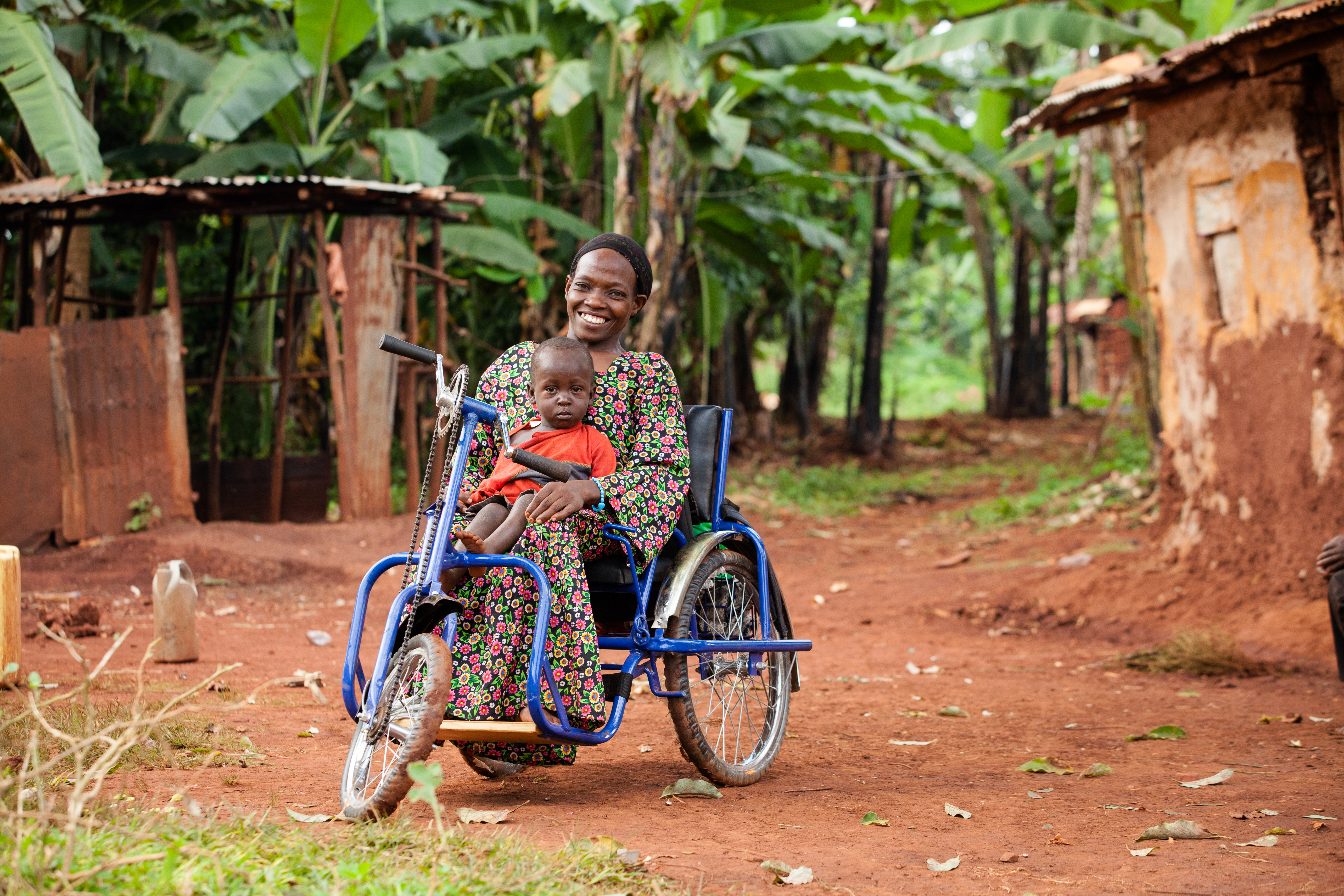
In some areas of the world, such as Kenya and Uganda, a different approach to standard wheelchairs needs to be used, so Walkabout Foundation introduced trikes. These incredibly designed tricycles allow users to get to school or work quickly and can be used in rugged terrain and designed to withstand wear.
Made from bicycle parts, which make them locally repairable, they also have a basket on the back, which is useful for storing shopping, luggage, and even sometimes children. The trikes make a huge difference to life – they don’t act just like a wheelchair, but also almost as a vehicle for the recipients. They really do enable people to get to school, work, or just into their community (where a normal wheelchair might not).
Follow Walkabout Foundation on Facebook and Twitter (@walkaboutorg)
How to set up a charity by the Woman who knows
Original article from Harpers Bazaar
The founder of Walkabout Foundation talks us through the steps she took to establish her charity

Over 23 years ago, Carolina Gonzalez-Bunster’s brother was involved in a car accident that that left him paralysed from the waist down. He was just 18.
Driven by a desire to help her sibling, in 2009, she established the Walkabout Foundation, which not only funds research into a cure for paralysis but also enhances education, understanding and awareness of disability and provides empowerment, independence and dignity to those with disabilities all around the world. Eventually, she quit her high-flying city banking job to work on the foundation full-time – and her efforts have paid off.
To date, Walkabout Foundation has distributed over 10,000 wheelchairs, impacting the lives of an estimated 30,000 people in 21 developing countries, and has funded one million dollars in ground-breaking research to find a cure for paralysis.
So how did she do it? You may have an idea for a charity, but working out the next steps can be difficult. Here, Gonzalez-Bunster shares her experiences.

Find your motivation or cause
“When I returned home to Greenwich, Connecticut in the US from London in the autumn of 2008 to visit my family, I saw that my brother was training for the New York Marathon. At the time, he was training in our family’s unheated outdoor swimming pool, as the lack of a wheelchair accessible entrance had kept him from using the brand new Olympic-size swimming pool at the local YMCA – a project that had received more than 30 million dollars in refurbishment. It was at that point that I realised I couldn’t let something like this go on. It was then that I saw I could do something more meaningful with my life. So, together with my brother, I set up Walkabout Foundation with the aim of funding research to find a cure for paralysis and donating wheelchairs and providing rehabilitation to people in need around the world.”
Develop a name and register it
“Funnily enough, my father came up with the name “Walkabout Foundation” because he liked the play on words: the foundation is all about ‘walking’ and getting those who can’t walk to walk again one day…so Walkabout seemed perfect. When I started to research the name “walkabout” and I learned the definition, I loved the name even more. The fact that the word walkabout means ‘a journey undertaken by an Australian Aboriginal in order to live in the traditional manner’ makes the name of the foundation even more appropriate. It’s symbolic of our mission and our purpose: getting those who are disabled to go back their original, traditional and normal state which is to be able to walk again one day.

Select a board of trustees
“I picked different individuals that I thought could help the charity in its mission and in its operations. We used to have many trustees (at one point we had about 12), but since then have reduced our board to just a few individuals. All our trustees are people that I knew at one point or other throughout my life that I asked to join.”
Build a website
“The following step was to create a website that would signal to the world “we are here, this is who we are, this is what we do, we are open for business.”
Think of a launch event that reflects your charity’s ethos
“We had to come up with an initiative or activity to launch the foundation. So my brother and I decided to go for a long walk since, after all, the name is ‘walkabout foundation’ and we are about walking and getting my brother to walk again one day. We came across the Camino de Santiago de Compostela in Spain, an ancient historical pilgrimage route and decided to follow the whole route, from start to finish, from France all the way across Spain, 900 kilometres over 31 days, I walked while my brother rode his hand-cycle beside me. Luis became the first person in the history of Spain to cross the entire country using the strength of his two arms.”

Understand that fundraising is hard
“It’s a challenge – coming up with new ways to raise funds, having to combat donor fatigue, having to come up with creative and original ways of fundraising so people don’t get tired of being asked to give again and again.”
Hire a reliable team and delegate
“After five years of running Walkabout, I realised that actually, it would benefit the charity to be led by someone other than myself – someone who could come in with the knowledge, experience, expertise and know-how to take it to the next level. I knew there would come a time when Walkabout would outgrow me as its leader so when I fell pregnant with my first child, I figured it was the perfect moment to search for someone else to run in. We didn’t get it right immediately, but after a few tries, one of our trustees came forward and said she would be honoured to lead it, and ever since then she has.”
Having high-profile supporters really helps
“It has also helped us a lot that we have had a few influential and noteworthy people endorse our work, such as President Bill Clinton, actor Martin Sheen (we did a film premiere with him and his son, Emilio Estevez in New York City which was a huge success), designer Donna Kara and Shakira.”
The most effective ways of fundraising are the most personal
“For example, when we hosted our first and only gala at the Natural History Museum here in London in 2015 with Bill Clinton as our keynote speaker and my entire family got up on stage, including Luis, to tell our story and the story of how Walkabout started. When Luis spoke about his personal struggles, and how it had taken him three hours to get dressed that day, you could hear a pin needle drop in the museum. People were in awe and in tears.”
Ensuring a constant cash floor requires a lot of work
“To ensure a constant flow, you have to keep organising meetings, you have to keep asking, you have to keep organising events, you have to keep tapping into corporates and businesses. There’s no single answer… you have to try all the different fundraising avenues and hope that at least one works.”
Follow Walkabout Foundation on Facebook and Twitter (@walkaboutorg)
Support Walkabout Foundation by watching their videos on Wegiveit and follow us on Facebook and Twitter (@wegiveituk)
How allergy UK is helping people with allergies

Allergies can affect anyone, at any age. An Allergy can be a life-changing and, in some cases, a life-threatening condition.
Allergy UK raises the profile of allergy at all levels by educating both those living with allergy and also Healthcare Professionals, providing advice and information and offering practical solutions to help identify and manage allergic conditions through everyday life. Everyone affected by allergy should receive the best possible care and support and not suffer in isolation and in fear.
Thousands of people contact their national Helpline every year, with millions visiting www.allergyuk.org to access the amazing depth of information, from eczema, hay fever, allergies from food and cows milk and anaphylaxis,
The allergy alerts service informs people of recalled products due to undeclared allergens on labels and keeps the allergic community safe.
Joshua’s Story
In preparation for my 13th birthday where I will reach the age of bar mitzvah, I have decided to take on 13 challenges/good deeds. With 5 Scout friends, I am going to take on the Chiltern 20 hike in October 2017. A tough 20km orienteering walk in the Chiltern Hills organised by Greater London North Scout County, to see what our physical ability is and to raise money for Allergy UK.
I am anaphylactic to peanuts and fish which means that if I eat either of them I could die. Allergy UK run a great service that informs its members of food that has been labelled incorrectly to ensure that people like me don’t eat the wrong thing.
In April a well-known brand incorrectly packaged up some sweets that contained peanuts. My mum received an alert informing her about the potentially deadly contamination and let me know. The very next day my Grandpa unwittingly purchased the product for us to share. I remembered the alert and we looked up the batch number, and it was indeed part of the contaminated batch. Allergy UK saved my life.
Joshua has since decided to raise funds for Allergy UK to help us reach more people with our potential life savings services. AllergyUK helps many people like Joshua every year, you can find more stories about their amazing supporters here.
Get in Touch
If you wish to contact AllergyUK, the helpline is available to call between 9am and 5pm, Monday to Friday, on 01322 619 898. The website has free downloadable Factsheets for everyone to access at www.allergyuk.org.
If you’re still unsure whether you have an allergy, their friendly advisors can point you in the direction of your nearest allergy clinic and answer any questions you may have surrounding your condition.
You can donate to AllergyUK for free by watching their videos on the Wegiveit homepage
Look Good, Feel Better

Look Good Feel Better is the only international cancer support charity providing practical support for women and teenagers struggling with the visible side effects of cancer treatment.
Self-esteem is important to all women, it just happens to be in sharper focus for those who have cancer. That’s the reason Look Good Feel Better exists. They have been helping to combat the visible side effects of cancer treatment for 20 years through free confidence-boosting skincare and make-up Workshops and Masterclasses across the UK.
The #Warpaint4Life campaign celebrates the power of beauty for all women everywhere. To feel confident, in control and empowered in life is every woman’s right and Look Good Feel Better exists to make sure that cancer doesn’t get to take that away.
“The vulnerability of being a cancer patient is far more extensive than you realise and being able to improve on that vulnerability by being more confident in your appearance has a huge impact.” Professor Hilary Thomas – Clinical Oncologist, Group Medical Director of Care UK & LGFB Beneficiary
The Look Good Feel Better free skincare and makeup Workshops and Masterclasses are held all over the UK for people undergoing treatment for any type of cancer. The two-hour sessions are led by trained beauty volunteers, who share tips and techniques to help with eyebrow and eyelash loss and changes to the skin.
“The whole experience was outstanding. It’s not just about a bit of makeup, it’s not vanity – it’s about control. It gives women the strength to fight this horrible disease.” Fiona, LGFB Beneficiary
Look Good Feel Better (LGFB) was formed in the UK 23 years ago, specifically to help women combat the visible side-effects of their cancer treatment. Our aim is to greatly increase women’s confidence and self-esteem at a very difficult time in their lives. The first Workshop was hosted in the CancerKin Centre at the Royal Free Hospital, London in 1994.
- Since launching, LGFB has helped over 147,000 women and teenagers face to face across the UK
- In 2016 we supported 17,500 women and teenagers through our Workshops and Masterclasses and many thousands more through our online and self-help materials
- The free skincare and makeup Workshops are held in 96 hospitals and cancer care centres across the UK
- Masterclasses enable LGFB to support women in community-based groups and areas not already offering our service, and we held more than 300 Masterclasses in 2016
- Over 2,500 volunteer beauty consultants work alongside LGFB
- Teenage Workshops were launched in 2001 and we held 70 of these tailored sessions in 2016
- LGFB needs more than 250,000 skincare and makeup products for gift bags and these are generously donated by the Beauty, Cosmetic and Fragrance Industry
- The #Warpaint4Life advertising campaign was created pro-bono by some of the industry’s top creatives and has appeared on donated space in shopping centres, billboards, magazines and newspapers. In 2015 it also won Marketing Campaign of the Year at the Third Sector Awards
- In 2009 we launched The LGFB Confidence Kit – an extensive self-help DVD and 48-page booklet designed to offer our support to people in their own homes
- A major research initiative highlighted that 97% of respondents felt more confident after attending an LGFB Workshop and this remained at 96% three months later (2,000 beneficiaries contacted)
- As the Beauty and Fragrance Industry’s flagship charity we work closely with more than 50 member companies and supporting brands
- The LGFB service is available in 26 countries worldwide and to date, they have collectively supported over 1.8 million people
Heart4More – Cardiac Worshops For The Premier league
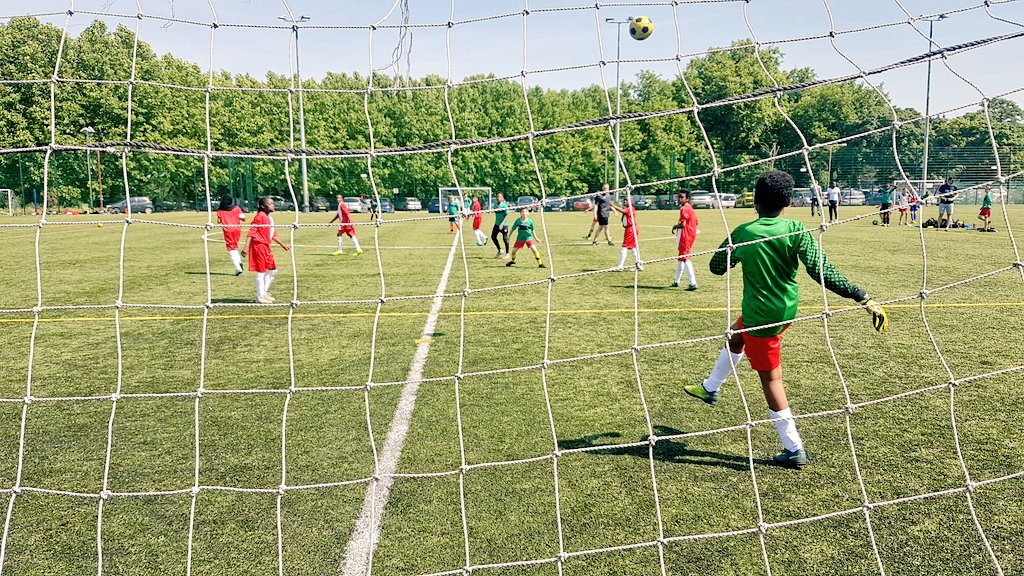
 The Heart4More Foundation was founded by Tobi Alabi after he suffered a cardiac arrest while playing football, aged just 19. They are the first, in the World, in their field to be recognised by the Football Authorities as a cardiac focused organisation to provide cardiac health workshops to players and staff at clubs within the Premier League, Professional Footballers Association, professional clubs and various educational institutions.
They also raise awareness by running community heart screening days and donate defibrillators to schools and sports clubs.
You can support Heart4More on Wegiveit by watching their videos on the homepage
Who represents the human in the digital age?

Source: Who represents the human in the digital age? |
WHO REPRESENTS THE HUMAN IN THE DIGITAL AGE?
20 July 2017 by Anni Rowland-Campbell, Director, Intersticia
AS TECHNOLOGY CHANGES, SO DOES THE PERCEIVED ROLE OF HUMANS
In his book, The Code Economy Philip E. Auerswald talks about the long history of humans developing code as a mechanism by which to create and regulate activities and markets.[1] We have Codes of Practice, Ethical Codes, Building Codes, and Legal Codes, just to name a few.
Each and every one of these is based on the data of human behaviour, and that data can now be collected, analysed, harvested and repurposed as never before through the application of intelligent machines that operate and are instructed by algorithms. Anything that can be articulated as an algorithm—a self-contained sequence of actions to be performed—is now fertile ground for machine analysis, and increasingly machine activity.
The invasion of the Social Machine is changing our relationship with both ourselves and each other.
So, what does this mean for us humans who, are ourselves a conglomeration of DNA code? I have spent many years thinking about this. Not that long ago my friends and family tolerated my speculations with good humour, but a fair degree of scepticism. Now I run workshops for boards and even my children are listening far more intently. Because people are sensing that the invasion of the ‘Social Machine’ is changing our relationship with such things as privacy, as well as with both ourselves and each other. It is changing how we understand our role as humans.
The Social Machine is the name given to the systems we have created that blur the lines between computational processes and human input, of which the World Wide Web is the largest and best known example. These ‘smart machines’[2] are increasingly pervading almost every aspect of human existence and, in many ways, getting to know us better than we know ourselves.
So who stands up for us humans? Who determines how society will harness and utilise the power of information technologies whilst ensuring that the human remains both relevant and important?
WE NEED TO ENSURE TECHNOLOGY IS SERVING HUMANITY, NOT VICE VERSA
Thus far it has mainly been either those in academia, such as the Web Science community, who observe and seek to understand what is going on. Those in the commercial sector, who are themselves driving the technological development. Meanwhile, those who are charged with setting policy boundaries and enforcing regulation (our governments) are like rabbits in the headlights struggling to keep up.
I believe that there is a space in between that presents both the greatest need to promote the cause of humanity, and the greatest opportunity to challenge and call to account the current onslaught of technological progress. We must demand that this technological progress serves humanity rather than undermines it. And that’s where, I think, philanthropy comes in.
PHILANTHROPY MUST LEAD IN HUMANISING OUR DIGITAL AGE
Philanthropy can be defined as love of humanity (philanthropos tropos) expressed as the caring, nourishing, developing and enhancing of what it is to be human.
I have written about Socrates’ concept of philanthropy and his desire to promote the welfare of others by wandering around talking to people, examining them as he examined himself. His goal was to help individual men and women understand themselves in order to live better lives and better serve their communities. The more I have reflected on this the more I realise that this concept of philanthropy needs to be at the centre of everything if humanity is to both survive and thrive in the digitally driven world.
Other players are seeking to speed things up, to rush towards a future that no one can predict, let alone understand, particularly as they are now creating machines that are capable of building themselves. These technologies will be of enormous benefit to humanity if they are harnessed and utilised for good. But someone has to stand up and demand that this good is at the forefront of all technological design and creation, not an inconvenient afterthought.
We must demand that this technological progress serves humanity rather than undermines it. And that’s where philanthropy comes in.
Australian economist Nicholas Gruen talks about what he sees as the disconnect between ‘the arteries and capillaries of government’ as a reflection of the more pervasive inequality within society. He highlights the inability of many of our existing systems to address the differing needs of human culture at different scales. This is because the arteries (those dealing with policy) neither leverage nor understand what happens in the capillaries (service delivery at the coal face).
I think that the join between the arteries and capillaries is precisely the space that those who have championed social change outside of the established systems of business and government—resulting in many of the great social reforms—have occupied. It is what philanthropy is all about.
Following last year’s Philanthropy Australia conference I challenged the sector to take the lead in occupying this middle ground. Instead of just reacting to the social problems created by ecological strain and economic stratification (the two factors which have, throughout history, led to the collapse of all civilisations) the philanthropic sector must proactively stand up for humans; it must work to shape the value system that will determine how government and business operates both now and as the digital world evolves.
There are two ways that the sector can do this:
- We must educate ourselves, and those with whom we work, about science and technology and the social impacts that are already emerging.
- We must be ingenious about how we leverage our space in the interstice between the arteries and capillaries of society.
Doing so will help us create a legitimate, important and powerful role in championing the humans we serve.
PHILANTHROPISTS MUST EQUIP THEMSELVES WITH THE KNOWLEDGE THEY NEED IN ORDER TO DO GOOD WITH DIGITAL
Consider the Luddites as they smashed the looms in the early 1800s. Their struggle is instructive because they were amongst the first to experience technological displacement. They sensed the degradation of human kind and they fought for social equality and fairness in the distribution of the benefits of science and technology to all. If knowledge is power, philanthropy must arm itself with knowledge of digital to ensure the power of digital lies with the many and not the few.
The best place to start in understanding the digital world as it stands now is to begin to see the world, and all human activities, through the lens of data and as a form of digital currency. This links back to the earlier idea of codes. Our activities, up until recently, were tacit and experiential, but now they are becoming increasingly explicit and quantified. Where we go, who we meet, what we say, what we do is all being registered, monitored and measured as long as we are connected to the digital infrastructure.
A new currency is emerging that is based on the world’s most valuable resource: data. It is this currency that connects the arteries and capillaries, and reaches across all disciplines and fields of expertise. The kind of education that is required now is to be able to make connections and to see the opportunities in the interstice between policy and day-to-day reality.
Philanthropy must arm itself with knowledge of new technology to ensure the power of digital lies with the many and not the few.
The dominant players in this space thus far have been the large corporations and governments that have harnessed and exploited digital currencies for their own benefit. Shoshana Zuboff describes this as the ‘surveillance economy’. But this data actually belongs to each and every human who generates it. As people begin to wake up to this we are gradually realising that this is what fuels the social currency of entrepreneurship, leadership and innovation, and provides the legitimacy upon which trust is based.
Trust is an outcome of experiences and interactions, but governments and corporations have transactionalised their interactions with citizens and consumer through exploiting data. As a consequence they have eroded the esteem with which they are held. The more they try to garner greater insights through data and surveillance, the more they alienate the people they seek to reach.
If we are smart what we need to do, as philanthropists, is to understand the fundamentals of data as a currency and integrate this in to each and every interaction we have. This will enable us to create relationships with the people that are based on the authenticity of purpose, supported by the data of proof. Yes, there have been some instances where the sector has not done as well as it could and betrayed that trust. But this only serves as a lesson as to how fragile the world of trust and legitimacy are. It shows how crucial it is that we define all that we do in terms of social outcomes and impact, however that is defined.
AND WE NEED TO ENSURE INNOVATION IS VALUES-DRIVEN TO SECURE THE BEST OUTCOMES FOR HUMANITY
Everyone these days wants to innovate and we have Innovation Labs popping up everywhere. My own personal opinion is that the real ideas don’t come from bean bags and refrigerators full of beer and mineral water, they come from the combination of necessity and invention. From ingenuity.
We must preserve what we value today in order to provide future generations with as many options and choices as possible.
Ingenuity is about being clever, original, and inventive, and applying ideas to solve problems and meet challenges. Above all ingenuity includes a sense of imagination and play. One of the ways we can become more ingenious is by imagining how the world around us could be, and nowhere is there more inspiration than in the world of science fiction. As Cory Doctorow says, ‘Science fiction predicts the present, and inspires the future.’
Most of those who have invented the technologies around us have always been avid readers of science fiction and we now live in a world that its writers have been dreaming up for centuries. The technologies upon which we so increasingly rely have been sitting in the labs for decades, but what has happened is that they have coalesced and been let loose in the wilds of human society.
It is not the technologies that determine what happens next, it is the humans. But as far as science fiction is concerned I believe that we are approaching an event horizon, a point from which we can no longer see what lies beyond because we are reaching the limits of what we can imagine. Things are changing very quickly. As Futurist Gerd Leonhard says, ‘Never in human history has the present been so temporary.’
But whatever the future holds for us is being determined right now, and this means we need to ensure that we learn as much from the past as we can while we still remember it. Executive Director of the Long Now Foundation Alexander Rose believes that preserving the elements of what we value today is crucial in order to provide future generations with as many options and choices as possible.
IT’S TIME FOR BRAVE LEADERSHIP IN THE SECTOR
With all of this in mind, the fundamental question facing each of us is: what role do we want to play? and how do we steer our organisations through the disruptive times ahead? There is no doubt this will be difficult.
I believe that the greatest contribution we can make is to focus firmly on the people who are the ultimate beneficiaries of technology. To become true servant leaders, and be those who are prepared to step up and lead the brave conversations that need to occur.
This requires taking a long hard look at how we run our lives, and ensuring that we take the time to step back and recalibrate, to focus on continuous, challenging and adaptive learning, and harness our imagination to become more ingenious.
What we need most is to take on the philanthropic mantle and put our humanity first.
As leaders, we can not leave this to other people. It is the role that each and every one of us must take on ourselves, regardless of age, stage or position. Beyond any need for skills and capabilities what we need most is to take on the philanthropic mantle and put our humanity first.
This essay is part of a series on transformation from the boldest voices in the sector.
ABOUT THE AUTHOR
Anni Rowland-Campbell is Director of Intersticia, a philanthropic foundation in Australia. She has had an eclectic career spanning the arts, government and corporate worlds, which she now brings together in the work she does as an independent philanthropist, Trustee of the Web Science Trust (UK) and Advisor to New Philanthropy Capital. Anni currently focuses on promoting digital literacy in the charity sector, specifically through educational and leadership development activities with boards and senior managers.
[1] Auerswald, P. (2017) The Code Economy
[2] For a good over see Zuboff, S. (1988) Age of the Smart Machine: The Future of Work and Power